

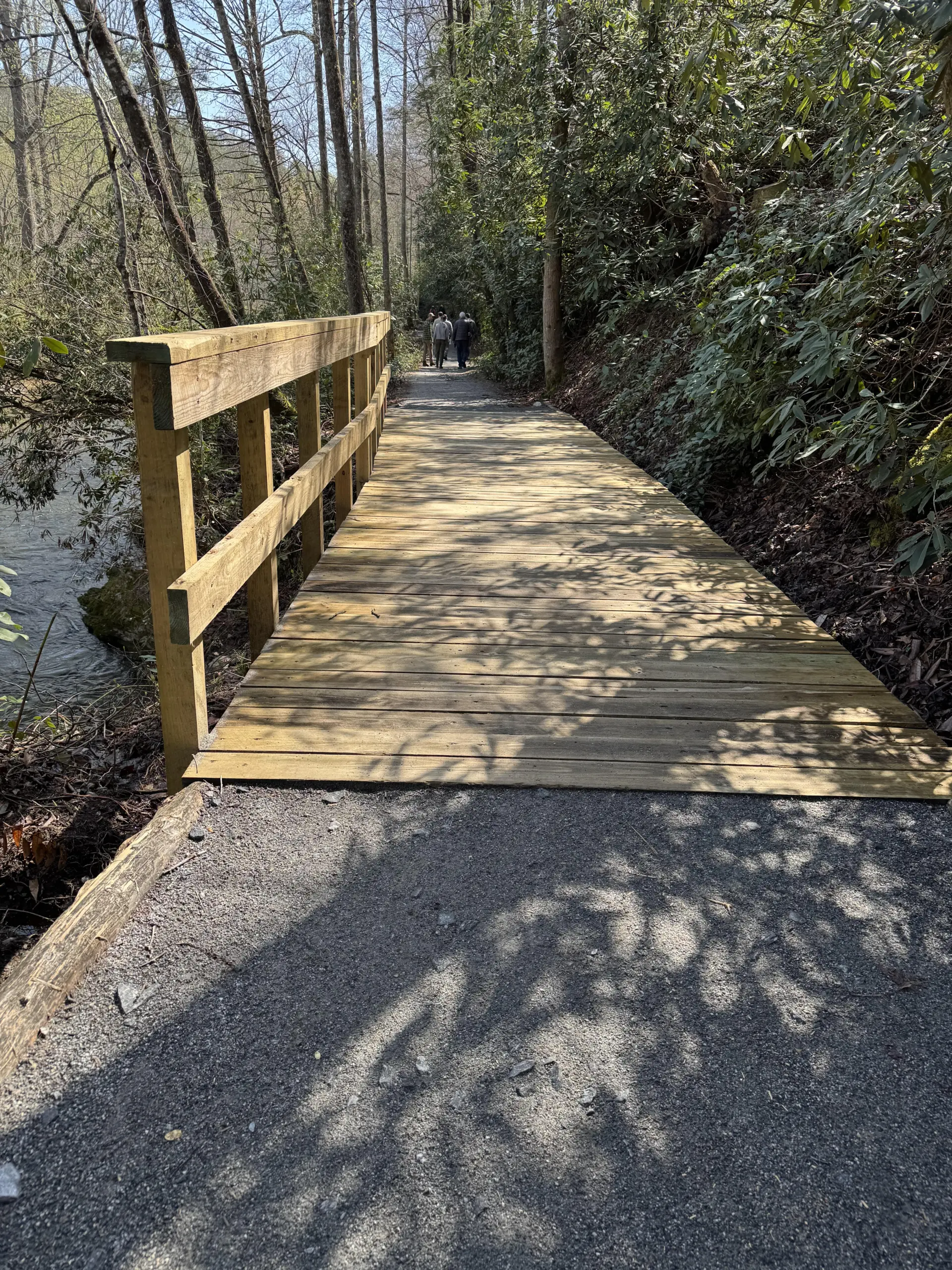
Recently, Areté Structures provided superstructure kits for several FRP stringer bridges for a trail improvement project near Brevard, North Carolina. This project transformed a previously wet, muddy section of trail into a durable, rideable surface. The project team achieved this by combining two construction methods: elevated turnpike trail and boardwalks. In an area that sees frequent rainfall throughout the year, managing water is critical. The turnpike sections slow runoff and channel it to the periodical stringer bridge spans that allow water to pass freely beneath the trail. This hybrid approach achieves and economical solution that minimizes erosion potential and results in a resilient and low maintenance trail.
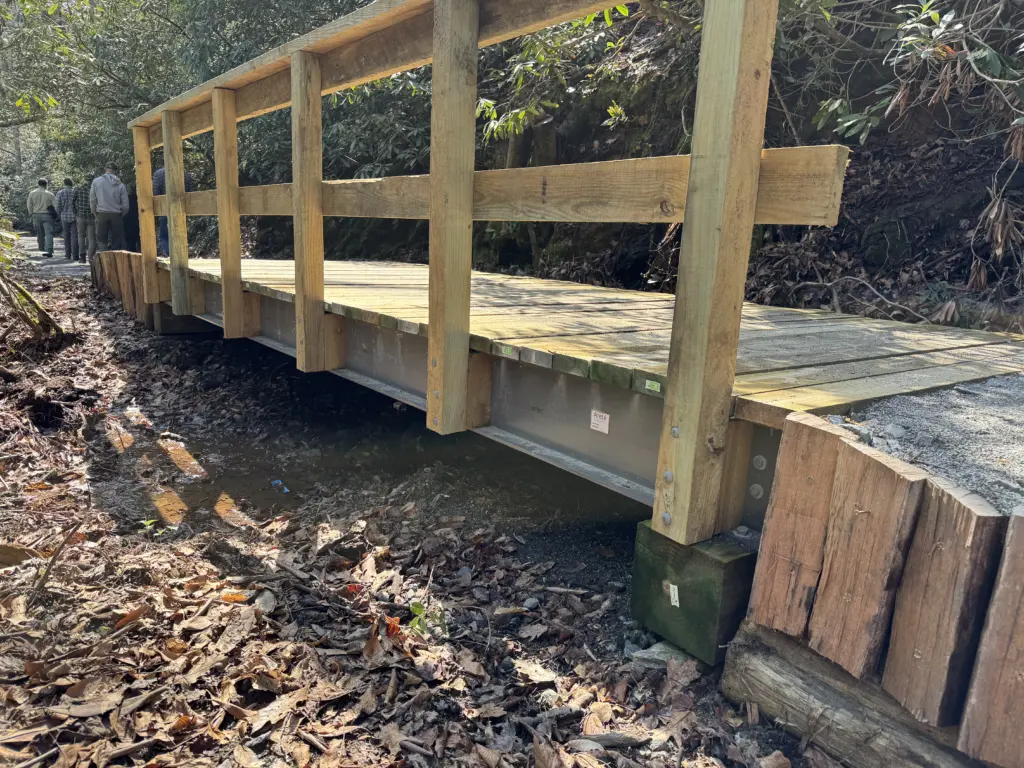
The Pisgah Conservancy deserves full credit for the creativity and craftsmanship behind this build. Their team developed an effective layout for challenging, moisture-prone terrain and executed it with impressive attention to detail. They also did an excellent job assembling the bridge superstructure kits and integrating them seamlessly into the trail. The rough sawn timber decking and railing on these bridges was sourced independently of Areté. This demonstrates the flexibility of these structures, and how they can seamlessly blend modern technology into natural settings.
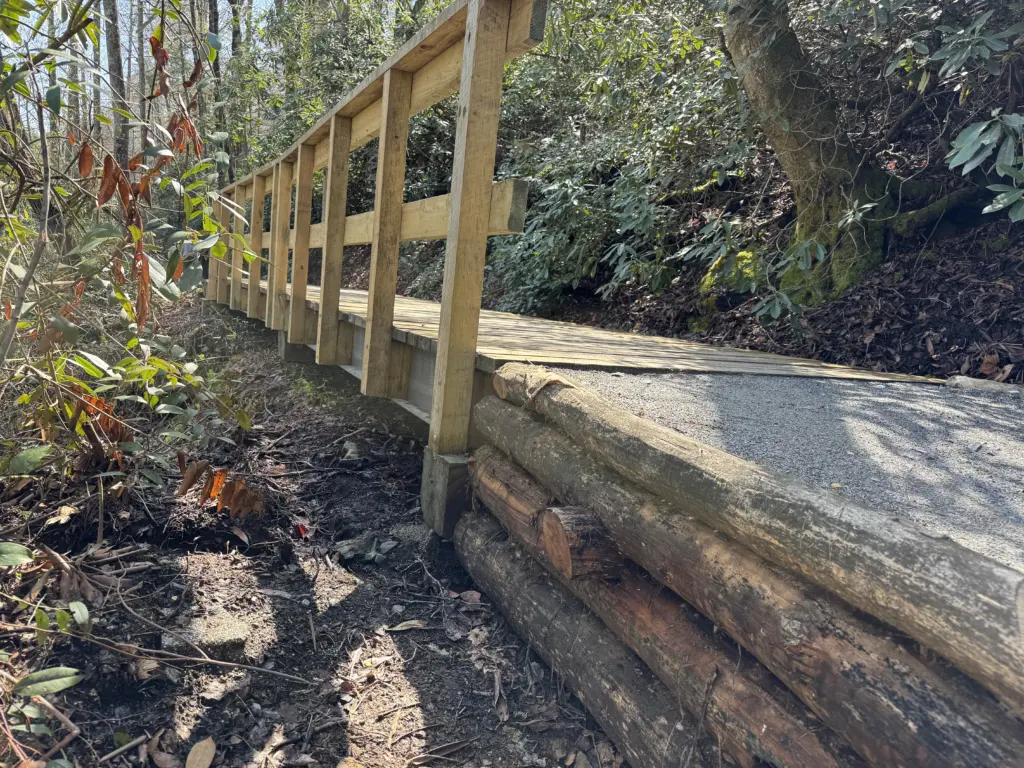
An FRP stringer bridge is an ideal fit for trail projects in places where rain, and drainage challenges are constant. Lightweight yet extremely strong, FRP stringers are easy to transport into remote trail corridors and quick to assemble on site—making them well-suited for short spans placed at regular intervals. Their resistance to moisture, rot, and corrosion ensures long-term performance in wet environments, reducing maintenance while preserving natural drainage patterns and protecting the surrounding ecosystem.