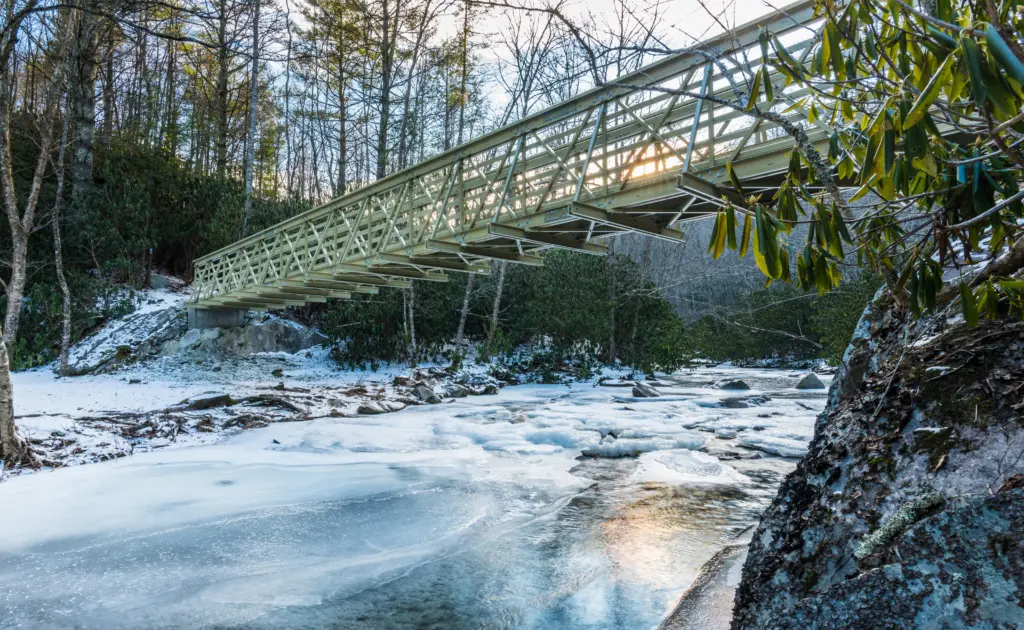

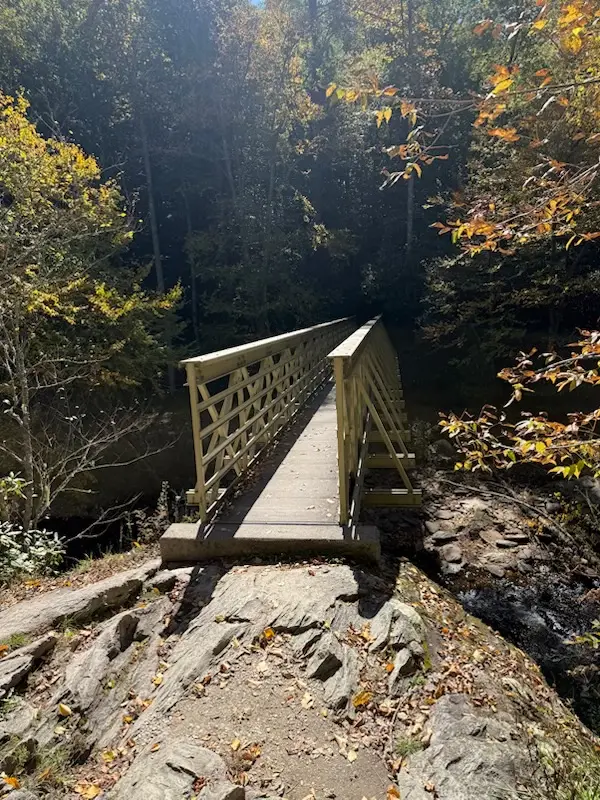
In October 2016, Arete Structures built its first FRP Pedestrian Bridge on the Boone Fork Trail. Ten years later, we revisit the work, people, and place that marked our beginning.
As we celebrate our tenth anniversary, we’re returning to that first crossing with photographs from its installation and photographs of the bridge today. Together, they connect two moments in our company’s story: the start of a new business and a decade of projects that followed.
Boone Fork also has an installation story worth sharing. Before the bridge could become part of the trail, it had to reach a remote site. For this project, that journey included a helicopter.
A Crossing With a Purpose
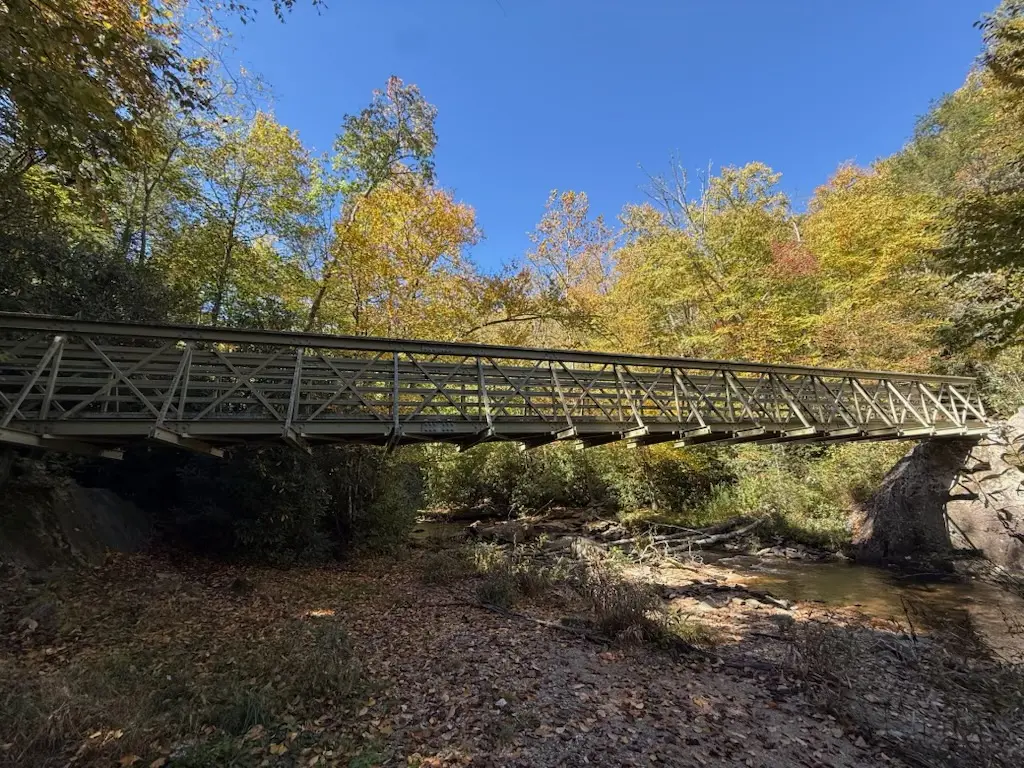
The Mountains-to-Sea Trail needed a way across Boone Fork Creek, about a mile from the Price Lake Picnic Area near Blowing Rock, North Carolina. The chosen site, where the Mountains-to-Sea Trail splits from the Boone Fork Trail, had rock outcroppings on opposite banks roughly 80 feet apart. These rock outcroppings made natural foundations for the bridge’s supports. Read the original project story.
For someone walking a trail, a bridge becomes part of the experience: a way across the water and a connection to the route ahead. Behind that crossing, are decisions about the setting, the materials, and how construction can happen in that particular place.
At Boone Fork, the surroundings were central to those decisions. The creek, the rocky banks, and the distance from the picnic area all helped define the project. Building a bridge there meant considering both the finished crossing and the practical work of getting it into place.
That attention to the location is something anyone can appreciate, even without an engineering background. A bridge has to fit the place where people will use it.
A Bridge Delivery by Helicopter
Getting a bridge to a remote trail crossing takes a different kind of planning from delivering it to a site beside a road. Before construction can move forward, the team has to work out how the bridge and the supplies needed to install it will reach their destination.
For Boone Fork, the answer included delivery from the air. A helicopter carried the bridge materials into the project site. It was a memorable part of the installation and an important step in making the crossing possible.
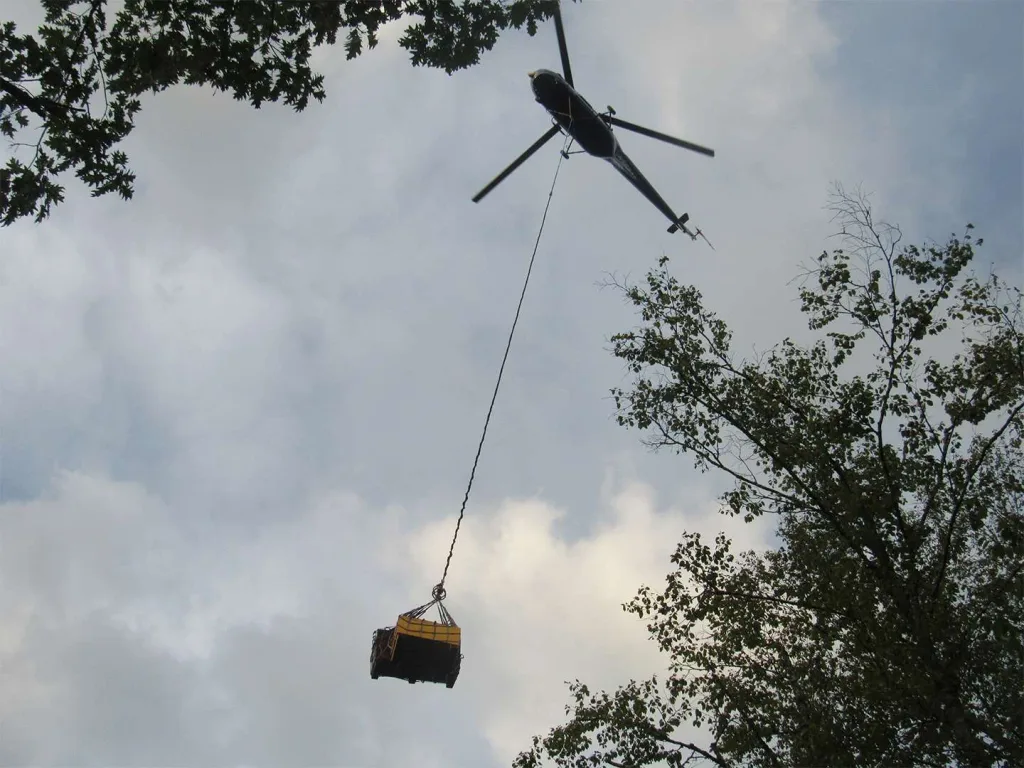
The helicopter is an especially striking detail to revisit during our anniversary. Most people picture a bridge in its finished position, spanning a creek or connecting two sections of trail. The installation photographs offer a chance to see an earlier part of its story: the effort required to bring that bridge to its destination.
An aerial delivery also brings the importance of preparation into focus. The people arranging the flight and the people working at the crossing need a coordinated plan for what is arriving and what happens next. The flight is one part of a larger sequence that carries the project toward completion.
The Material Behind the Bridge
The Boone Fork Bridge was built using fiber-reinforced polymer (FRP). In simple terms, FRP combines reinforcing fibers with a polymer resin to make a strong, lightweight material. Areté Structures’ bridge components can be prefabricated and assembled at the project site, making the material useful for remote crossings. Learn more about FRP.
That combination helps connect the material choice to the installation story. When a project is away from ordinary road access, the weight and handling of its components matter. Thinking through delivery is part of thinking through the bridge itself.
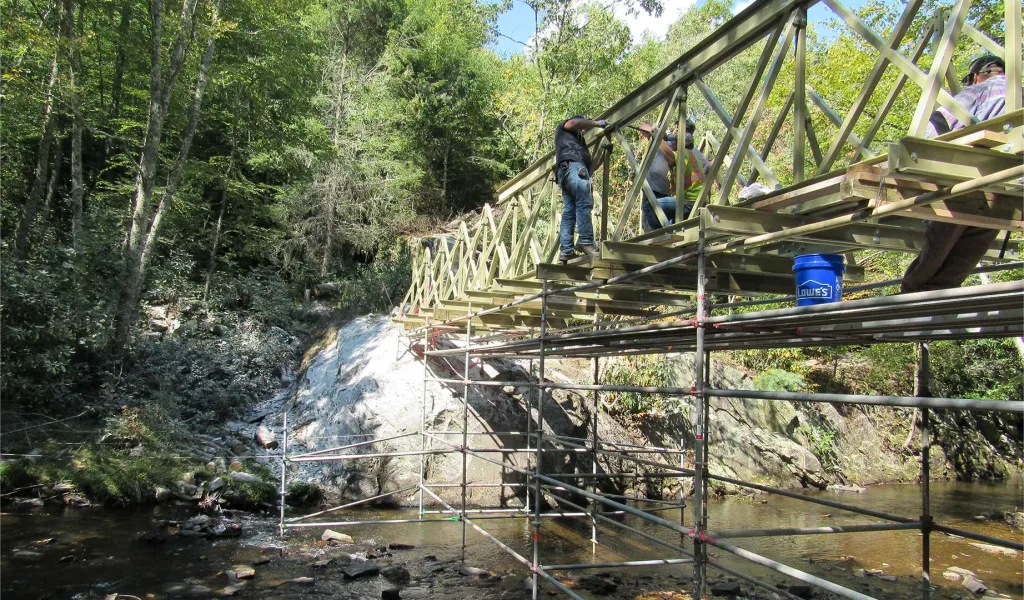
At Boone Fork, construction moved through several stages: preparing the supports, erecting scaffolding beneath the crossing, and assembling the bridge. Once the supports and scaffolding were ready, the installation team assembled the bridge’s main structure in four days, following the plans and assembly guidance supplied by Areté Structures.
A Bridge that Survived Hurricane Helene
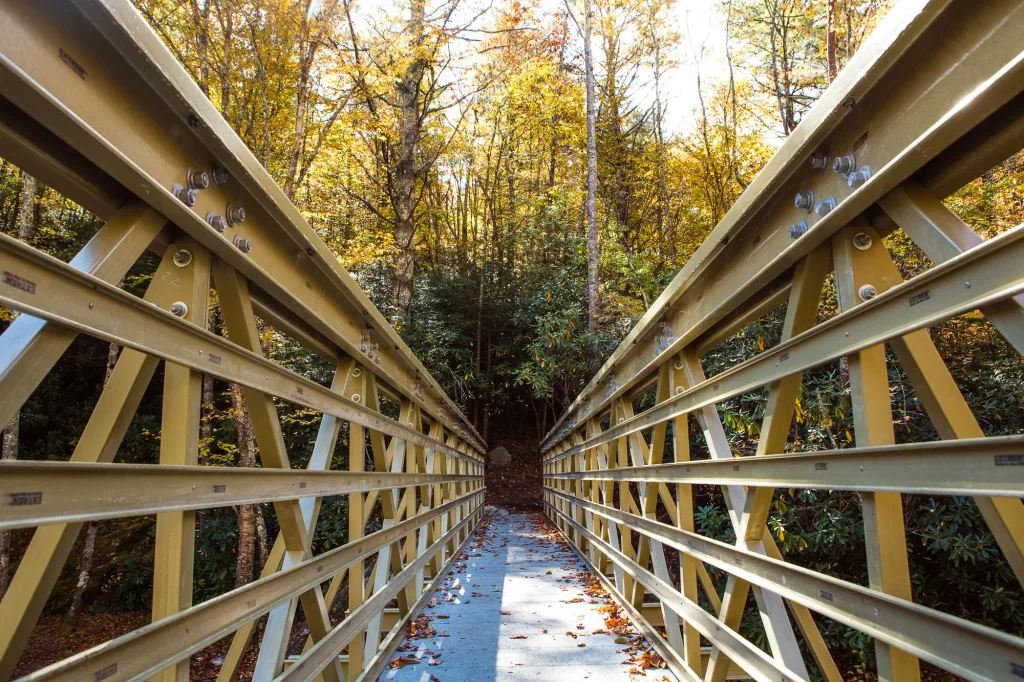
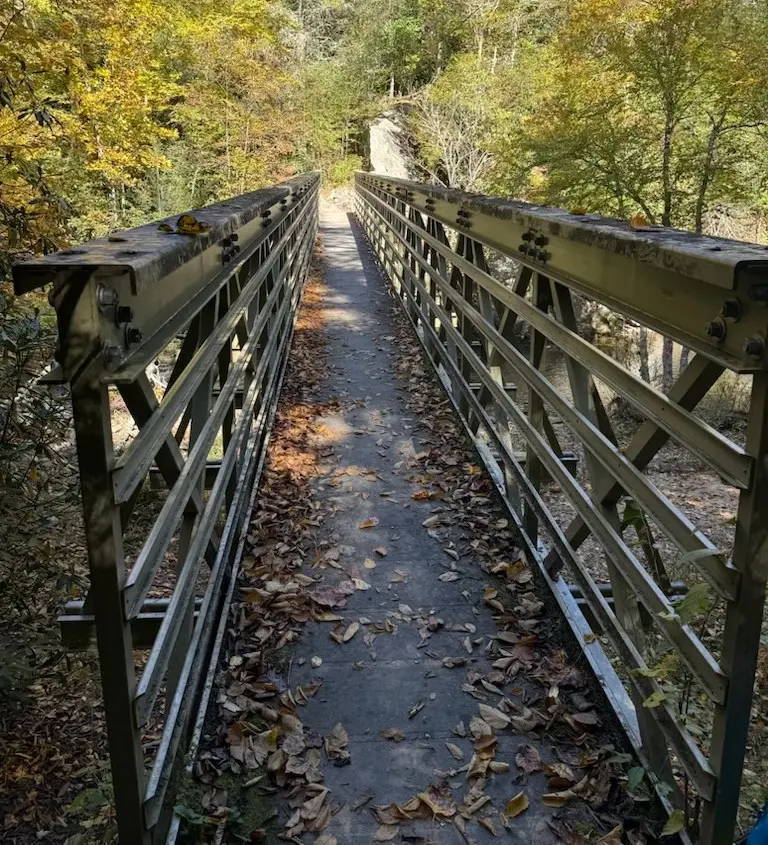
It wasn’t long after the bridge was constructed that it took on its first major test—Hurricane Helene. This Category 4 Hurricane made its way up to Western North Carolina, causing mass destruction for an area not well prepared to take on this challenge. What this meant for the Mountains-to-Sea trail was that many timber bridges were completely destroyed or damaged very badly during the storm; however, the Boone Fork Bridge survived. For Areté Structures, this was proof that our durable FRP bridges can withstand even the toughest challenges thrown its way.
Remembering the People Behind the First Bridge
A bridge project brings together many kinds of work. Someone identifies the need for a crossing. Others help plan, prepare, deliver, and assemble it. Each contribution becomes part of the finished project, even when the people using the bridge never see the steps that came before.
For Adam Felmlee, an engineer at Areté Structures who worked on Boone Fork, those steps are still easy to picture:
“Boone Fork was a memorable first project, from the helicopter delivery to assembling the bridge out on the trail. Seeing it there ten years later makes me proud of the planning and teamwork that went into it.”
We’re grateful to the Friends of the Mountains-to-Sea Trail and everyone involved in this first installation. We also appreciate the customers, partners, and communities who have worked with us on the projects that followed.
Carrying the Story Forward
The team at Areté Structures is proud to mark ten years. When we built Boone Fork, we knew it would be the first of many bridges, and that vision still guides us to keep building durable, safe, and accessible crossings. To every project owner, engineer, contractor, trail crew member, and hiker who has been part of this story, thank you. We’re grateful for the last ten years and look forward to serving you for many more!